- Home
- FAQ
Questions
Frequently asked questions
Straight answers to what homeowners ask before they call. If yours is not here, call and ask.
Still have a question? Call the office, Monday to Saturday, 9:00 AM to 5:00 PM.
Crawl spaces
What is the difference between encapsulation and a vapor barrier?
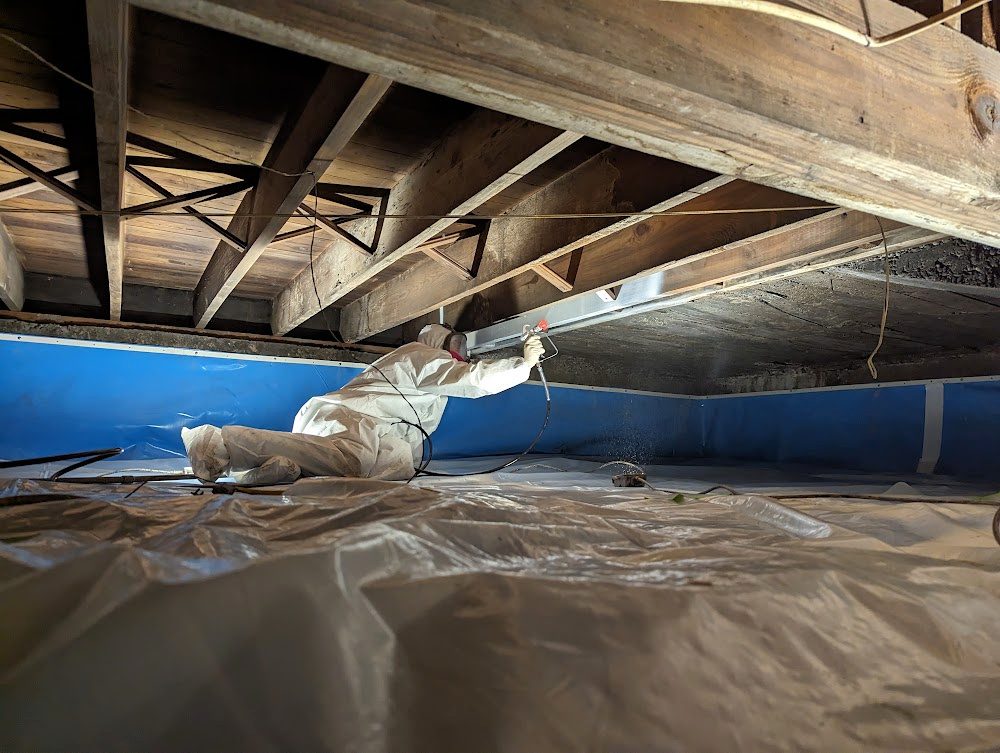
A vapor barrier is a sheet of plastic on the dirt floor. Encapsulation seals the entire space: a heavy liner across the floor and up the walls, sealed seams and piers, sealed vents, and usually a dehumidifier. A vapor barrier slows moisture; encapsulation controls it.
What does crawl space reconditioning include?
Everything needed to make the space dry and healthy again: removing ruined insulation and debris, treating mold, fixing drainage, installing a liner and new insulation, and repairing wood that moisture has damaged. It is our most common job.
My crawl space smells musty but I do not see water. Is that a problem?
Yes. The smell is moisture and often mold, and a large share of the air in your living space rises from the crawl space. High humidity under the house also warps floors and invites pests. A free inspection shows you what is going on.
Should crawl space vents be open or closed?
In Louisville's humid summers, open vents pull in warm, wet air that condenses on cool surfaces under the house. Sealing the vents as part of encapsulation, with a dehumidifier controlling the air, is the approach building science supports.
Basements
Where is the water in my basement coming from?
Usually the cove joint where the floor meets the wall, cracks in poured walls, mortar joints in block, or window wells. Louisville's clay soil holds water against the foundation after rain, and hydrostatic pressure pushes it through the weakest point.
Interior or exterior waterproofing?
Interior drainage systems handle most Louisville basements, cost less and do not tear up the yard. Exterior waterproofing is the right call when the wall itself is failing or the layout makes interior work impractical. We recommend based on the house, not on the price.
Will a sump pump alone fix a wet basement?
A pump only moves the water that reaches it. Without a drainage system feeding it, water still crosses the floor. Together they work; alone, a pump is half a solution.
Mold
Is mold in a crawl space dangerous?
It can affect indoor air quality, and it always means moisture is present. We treat it with IICRC-certified methods, then fix the moisture so the conditions that grew it are gone.
Do you test for mold?
We inspect and identify visible growth and moisture conditions. If you need lab testing for a real estate transaction or a medical reason, we can point you to an independent tester so the results are unbiased.
Working with us
How long does a job take?
It depends on the space and what turns up. We tell you the schedule at the estimate and keep you posted during the work.
Do I need to be home?
For the inspection, yes, so we can show you what we find. For the work, only for access; most customers go about their day.
Are you insured and certified?
Yes: insured, Google Verified through Google Local Services (which includes a background check), and IICRC certified for mold and water damage. Ask at the estimate and we will show you the paperwork.
Do you handle insurance claims?
Yes, for covered sudden water damage. We document the job the way adjusters need it and work with your insurer directly.
Ready when you are
Call (502) 701-7882 or request a free estimate online. A technician comes out, looks, and puts the plan in writing.