

Learn
Why your sump pump keeps running, and when it is a problem
A sump pump that cycles all day is doing its job or telling you something is wrong with it. Here is how to tell the difference before it fails on the wettest night of the year.
The short version
- During and after heavy rain, frequent cycling is normal in Louisville. Days later, on dry ground, it is not.
- The usual causes: a stuck or badly set float, a discharge line that dumps water right back at the foundation, a failed check valve, or a high water table.
- A pump that runs constantly wears out fast and fails without warning. Battery backup is what saves the basement when it does.
- If the pump runs but water still comes in, the drainage feeding it is the problem, not the pump.
First, is it actually a problem?
Louisville sits on clay over limestone. After a big storm the clay stays saturated for days and groundwater keeps moving toward the lowest point it can find, which is your sump basin. A pump that cycles every few minutes for a day or two after two inches of rain is working exactly as designed. Write down when it started and watch whether it settles as the ground drains.
If it is still cycling four or five days later with dry skies, or it runs in a dry spell, something else is going on.
The common causes, most likely first
1. The discharge line is feeding the water back
The most common thing we find. The pump pushes water out through a pipe that ends a foot or two from the house, or into a downspout extension that has come apart, and that water soaks straight back down along the foundation and into the drain tile. The pump is pumping the same water in a circle. The fix is a discharge line that runs well away from the house to daylight, a drywell or a storm connection, with a proper pop-up emitter at the end.
2. The check valve has failed
The check valve stops the water in the discharge pipe from falling back into the basin when the pump shuts off. When it sticks or fails, the same column of water drops back every cycle and the pump runs again to lift it. Listen after a cycle: a gurgle and a quick restart is the tell. It is an inexpensive part and worth replacing at the first sign.
3. The float switch is stuck or set wrong
Floats snag on the basin wall, the discharge pipe or a loose cord, and a tethered float that is set too tight runs the pump for a few seconds at a time, constantly. An open pit full of debris makes both more likely. A sealed lid with the cords passing through grommets keeps the float free.
4. The pump is undersized or worn
A pump that is too small for the inflow never gets ahead, and an old pump loses capacity as the impeller wears. Either way it runs longer and longer to move the same water, heats up, and one night it does not restart. Ten years is a reasonable life for a good pump that is not overworked; a pump that runs constantly will not see that.
5. A high water table
Near the river, the creeks and in the lower parts of town, the water table is simply high after wet weather and the pump has real work to do for weeks. That is not a fault, but it is a reason for a quality pump, a battery backup and a discharge that actually gets the water away.
When the pump runs but the floor is still wet
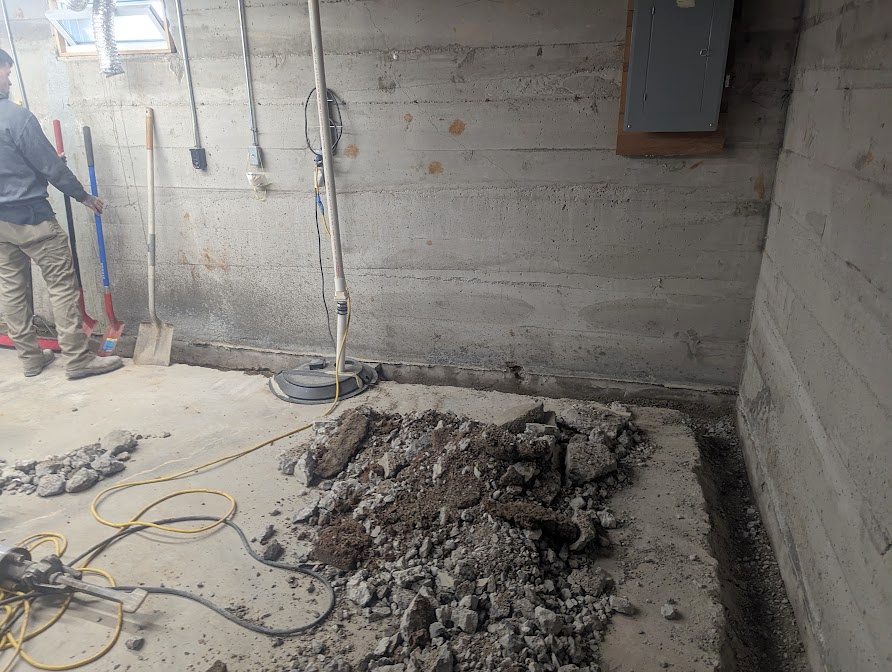
Then the pump is not the weak link. Water is coming in somewhere the drain tile does not reach: a wall crack, a cove joint the perimeter drain does not cover, a window well, or a section of drain that has silted up. That is a basement waterproofing question, and it starts with finding where the water gets in, not with a bigger pump.
What a proper sump installation looks like
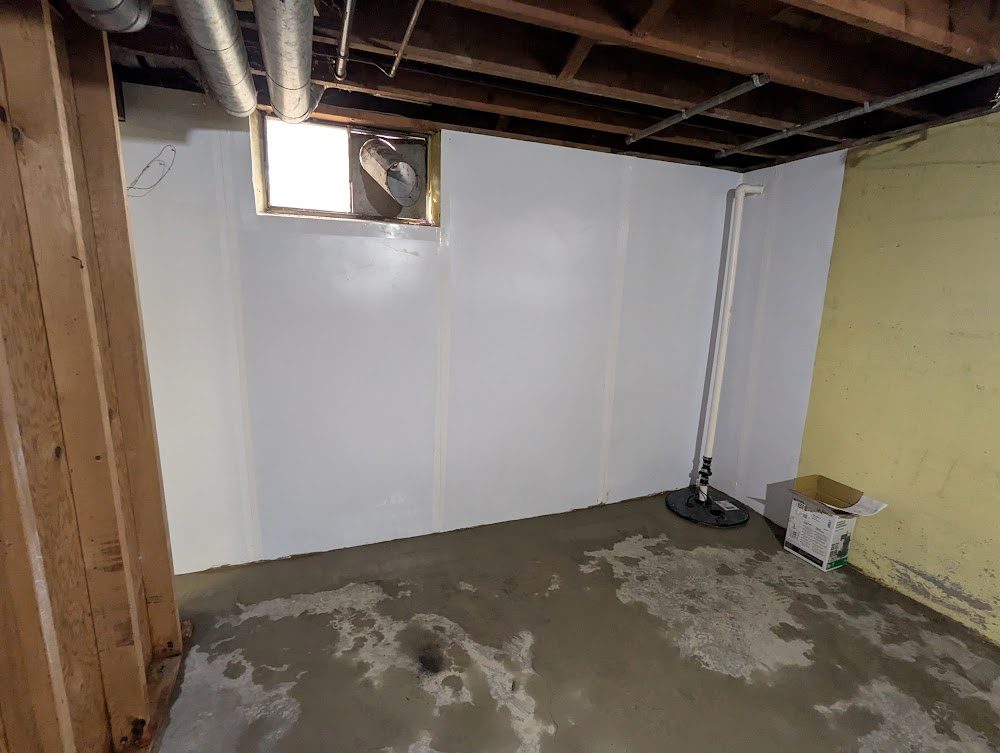
- A basin set at the low point of the perimeter drain, not just where there was room.
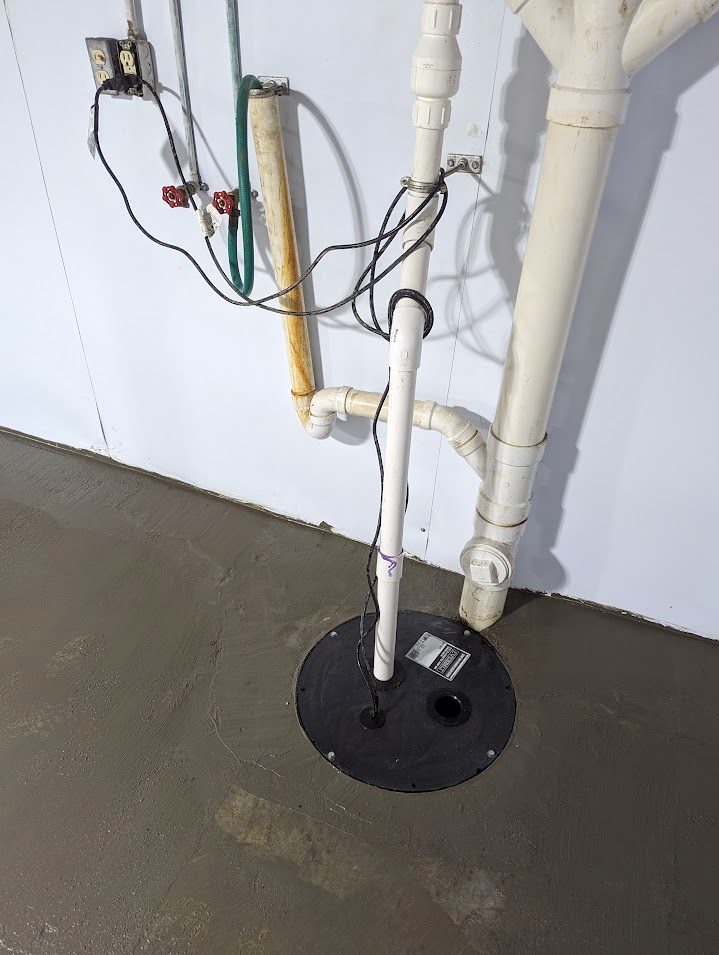
- A sealed, gasketed lid so humidity, radon and debris stay out and the float stays free.
- A quality pump sized to the flow, a check valve on the discharge, and a union so the pump can be pulled for service.
- A discharge line that runs away from the foundation to a place the water cannot come back from.
- A battery backup pump on its own float, because the storms that fill the basin are the ones that take the power out.
The one thing to do this week
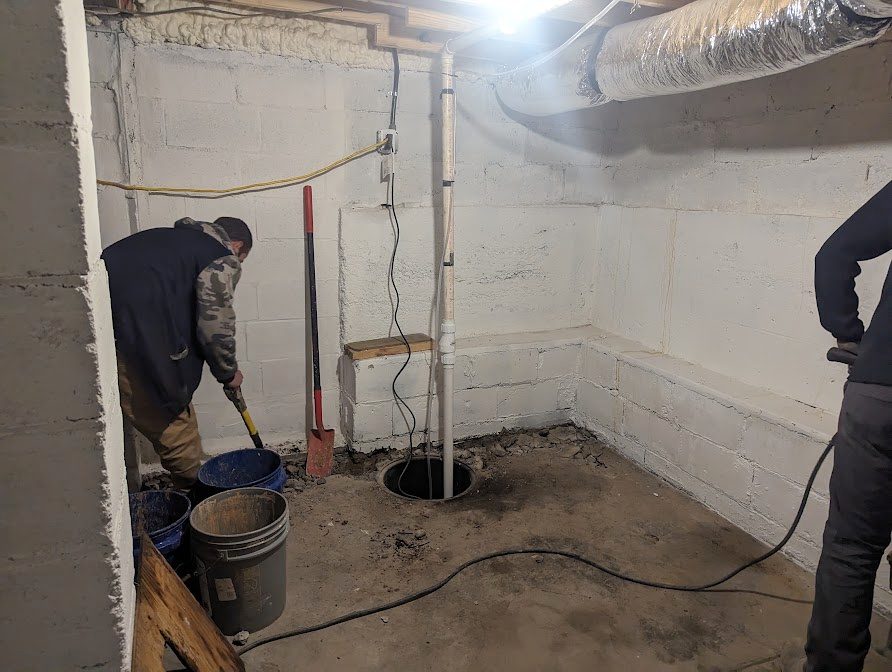
Pour a bucket of water into the basin and watch a full cycle: the float should rise freely, the pump should run smoothly, the water should leave and not come back, and the pump should shut off cleanly. Then walk outside and find where that water came out. If you cannot find it, that is your answer.
Keep reading
More from the crew
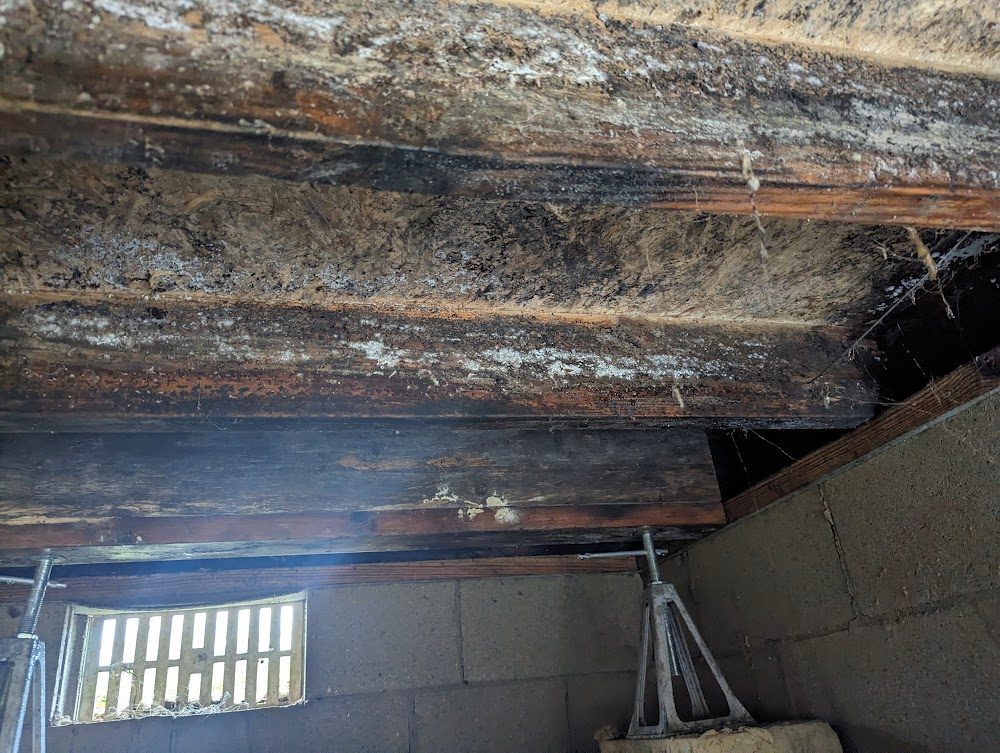
Should you close crawl space vents in winter in Kentucky?
Close crawl space vents in winter to protect pipes and floors; opening them in summer lets humid air in. Why sealing them for good, with a liner and dehumidifier, is the Kentucky answer.
Read the article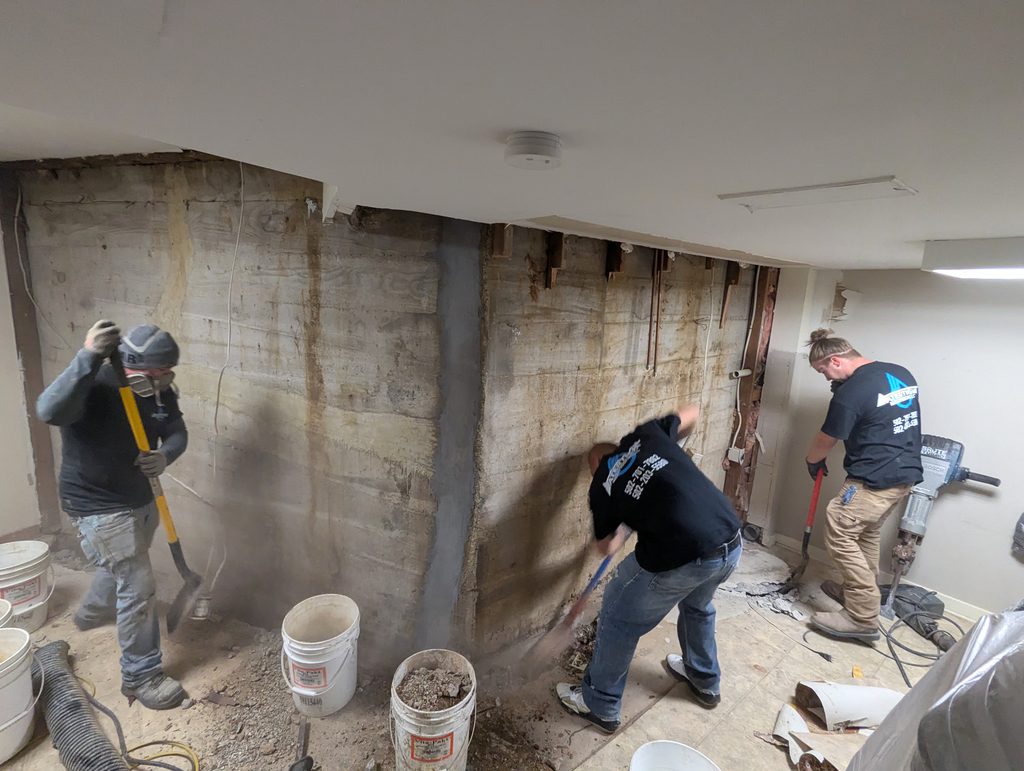
Basement flooded? What to do in the first 24 hours
Power off, water out, wet material out within a day, then find the cause. A calm first-24-hours checklist for a flooded Louisville basement, including what not to do.
Read the article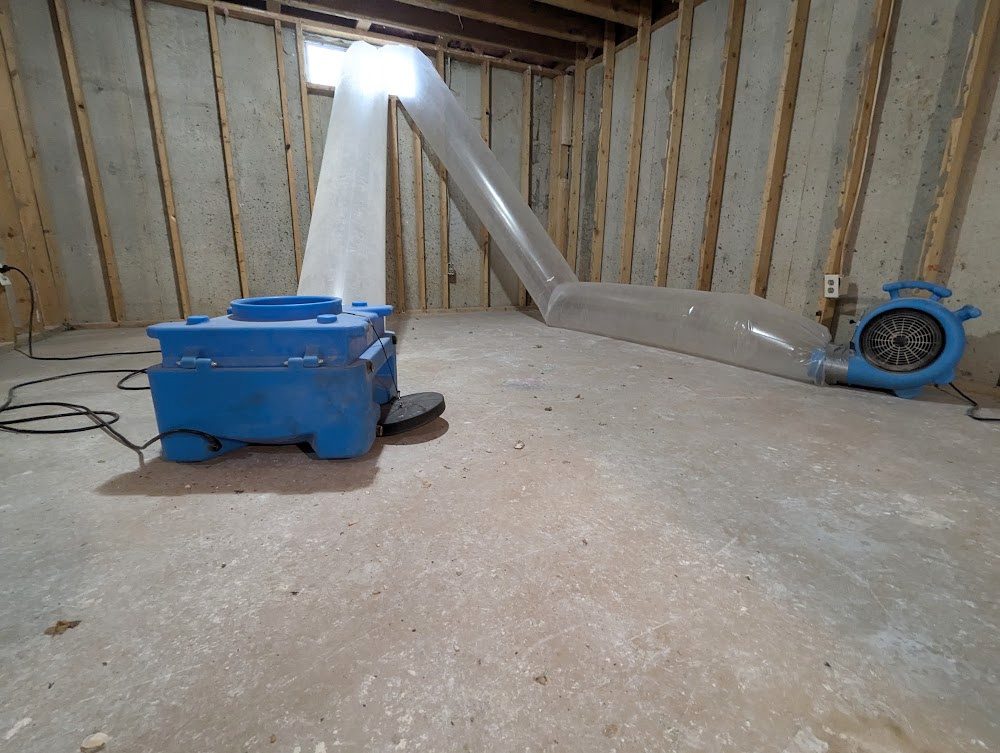
Does homeowners insurance cover basement or crawl space water damage?
Sudden water from inside the house is usually covered; groundwater seepage, flooding and sump failures usually are not without an endorsement. What Louisville homeowners should know before they file.
Read the articleQuestions
Asked about this
Still have a question? Call the office, Monday to Saturday, 9:00 AM to 5:00 PM.
How often should a sump pump run?
During and right after heavy rain, every few minutes is normal in Louisville. In dry weather a healthy system runs rarely or not at all. Constant cycling on dry ground points to the discharge, the check valve, the float or the pump itself.
Can a sump pump run continuously without burning out?
Not for long. Continuous running overheats the motor and wears the impeller and switch. A pump that never rests is on its way to failing, and it usually fails during a storm.
Should a sump pump have a battery backup?
Yes, if the basement matters. The same storms that fill the basin knock the power out. A backup pump with its own float and battery keeps pumping through an outage and covers a failed primary pump.
Why does my sump pump run when it has not rained?
Either groundwater is still draining from the last storm, the water table is high, or the discharge water is coming straight back to the foundation. Check where the discharge line ends first.
Related services
What we do about it
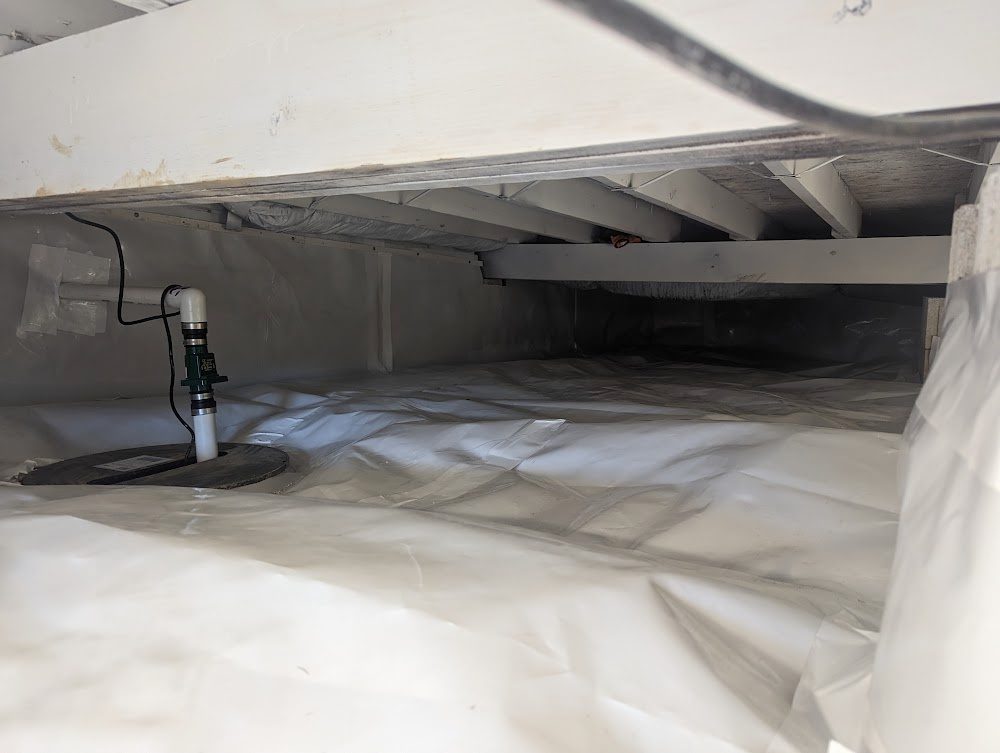
Sump Pump Installation and Replacement
Sealed basins, quality pumps, battery backup: the last line of defense, done right.
Learn more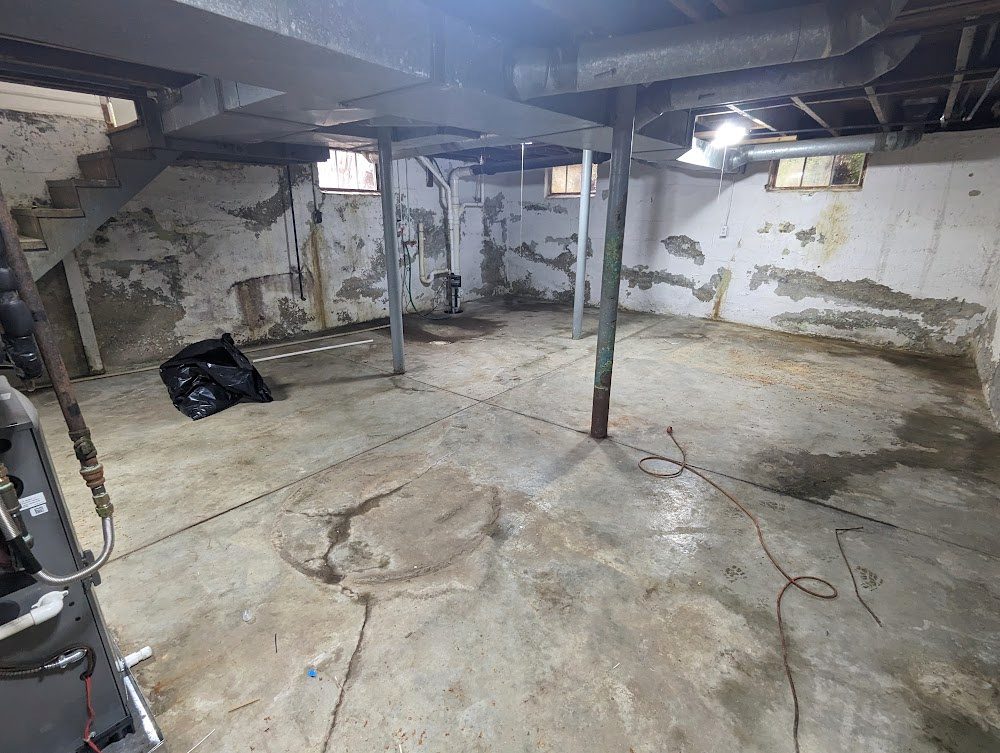
Basement Waterproofing
Interior drainage, sealed walls and a sump that carry the water out after heavy rain.
Learn more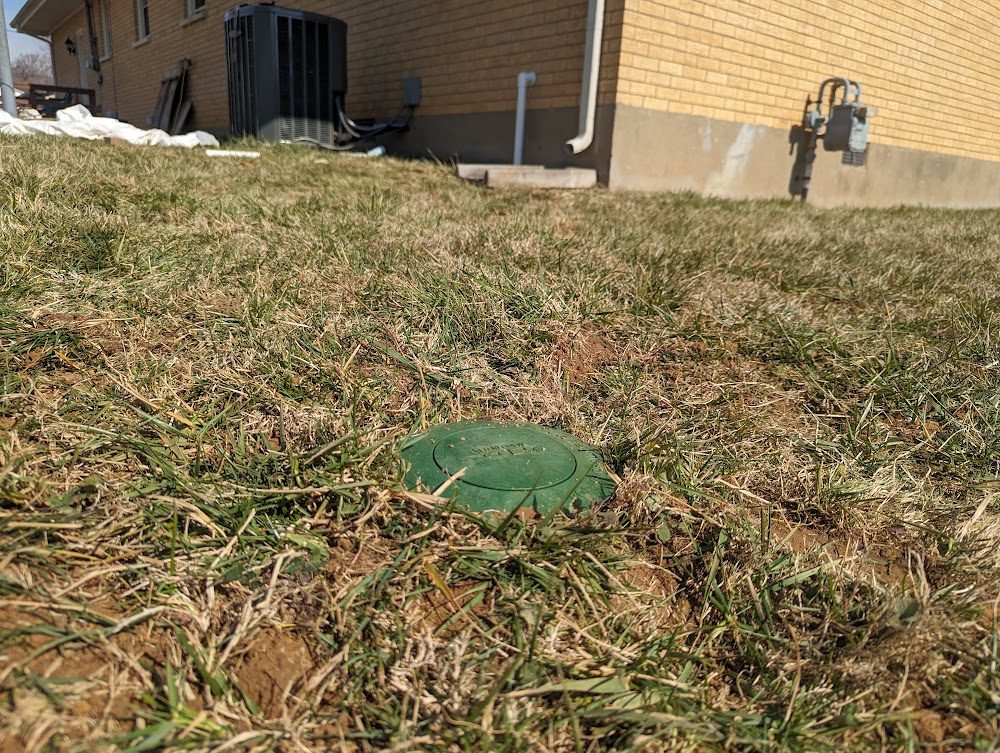
Downspout Extensions and Buried Drains
Buried downspout lines and pop-up emitters that keep roof water off the foundation.
Learn moreFree estimate
Want a technician to look?
Tell us what you are seeing. A technician calls back during business hours and books a time to come out. Free, no obligation, written price.
- Photos and a plain explanation of the cause
- Written scope and price
- Lifetime transferable warranty on our work